
Breaking Free from Pornography: The PATH Plan and Practical Tools for Real Recovery

Today, I’m excited to share a conversation that’s both deeply personal and powerfully practical. I recently sat down with Dan Johnson, a man who’s walked the hard road of pornography addiction and emerged with hard-won wisdom and a toolkit that’s helping men everywhere break free from unwanted sexual behaviors. If you’ve ever wondered, “What do I do in the heat of temptation?”—this post is for you.
We’re going to dive deep into Dan’s story, the origins of his “PATH Plan,” and the nuanced, actionable steps you can take to move from battling urges to experiencing real, lasting freedom. I’ll break down each tip, offer expert insights, and give you the tools you need to take your next best step.
Dan’s Story: Why Filters and Accountability Aren’t Enough in Recovery
Dan’s journey is familiar to many men. Raised in a loving, faith-filled home, he encountered pornography at a young age and quickly found himself hooked. Despite accountability partners, internet filters, and even seasons of white-knuckled willpower, the cycle of temptation and relapse continued for years—even into marriage and fatherhood.
Key Insight: Even with all the right tools in place, Dan found himself powerless in the “front line moment”—that split second when temptation hits and the old patterns threaten to take over.
This is where most men get stuck. We know what we should do, but in the moment, our brains go on autopilot. Dan realized he needed a practical, memorable plan for those exact moments. That’s how the PATH Plan was born.
The PATH Plan: Four Steps to Victory in the Moment of Temptation
Let’s break down the PATH Plan, step by step, with actionable advice and deeper insights from Dan’s experience.

1. Pause
What it is: When you feel the urge, stop what you’re doing. Take a deep breath. Give yourself five to ten seconds to interrupt the automatic response.
Why it matters: Pausing creates a gap between stimulus and response. It’s the first step in regaining control over your actions.
How to do it well:
Physically remove your hands from the keyboard or phone (or whatever else you're doing).
Stand up or change your posture.
Take a slow, deep breath and exhale fully.
Remind yourself: “I have a choice right now.”
Expert Tip:The pause isn’t about shaming yourself—it’s about creating space for a new response. Even a few seconds can disrupt the old neural pathways and open the door to freedom.

2. Acknowledge
What it is: Name what you’re feeling. Say (out loud or in your mind), “I’m feeling the urge right now,” or “I’m feeling tempted.”
Why it matters: Acknowledging the urge grounds you in reality. It shifts you from denial or panic to mindful awareness.
How to do it well:
Use specific language: “I notice a strong urge in my chest,” or “I feel anxious and want to escape.”
Avoid judgment. Don’t label yourself as “bad” for feeling the urge.
Practice self-compassion: “It’s okay to feel this. I’m not alone.”
Expert Tip: Dan compares the urge to Dwight Schrute from The Office—intense, but with no real authority. The urge is just a feeling, not a command.

3. Timer
What it is: Set a timer for 10 minutes (or start with 3-5 if you’re new). While the timer runs, go about your day and allow the urge to be present. Don’t fight it, don’t give in—just let it be.
Why it matters: This step is about “allowing the urge,” not battling it. Research shows that cravings and urges rise and fall like waves. If you can ride out the wave, it will pass.
How to do it well:
Use your phone or a kitchen timer—make it visible.
During the timer, engage in a neutral or positive activity (walk, read, do chores).
Focus on your breath or body sensations. Notice where you feel the urge.
Remind yourself: “I’m just feeling a sensation. It will pass.”
Expert Tip: Allowing the urge is radically different from resisting it. When you stop fighting, the urge loses its power. Over time, this rewires your brain’s response to temptation.

4. High Five
What it is: Celebrate your victory, no matter how small. Record it in a journal, put a marble in a jar, or simply give yourself a literal high five.
Why it matters: Positive reinforcement is crucial. Instead of tracking “streaks” (which can lead to shame after a slip), you’re building a record of wins—moments when you chose freedom.
How to do it well:
Keep a visible jar or journal to mark each victory.
Share your win with a trusted friend or accountability partner.
Reflect on what worked and how you felt.
Expert Tip: Scripture often calls us to remember and memorialize victories. This step builds hope and momentum for the next battle.
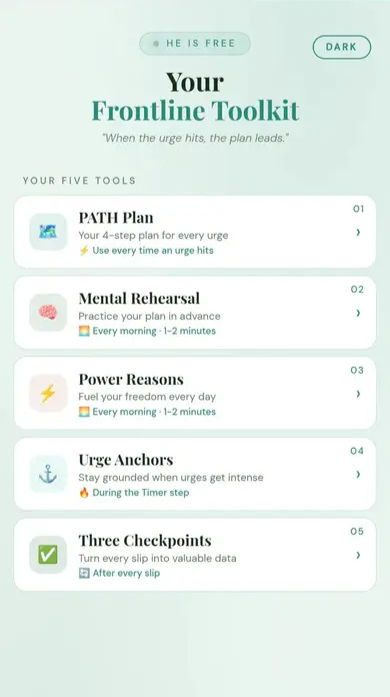
Beyond the PATH Plan: The Frontline Toolkit
Dan didn’t stop with the Path Plan. He developed a broader “Frontline Toolkit” to help men prepare for and respond to temptation. Here’s what’s inside:
1. Mental Rehearsal
What it is: Spend 1-2 minutes each morning visualizing a likely moment of temptation and picturing yourself using the Path Plan.
Why it matters: Mental rehearsal primes your brain to respond intentionally when the real moment comes. Studies show this increases follow-through and reduces automatic, impulsive behavior.
How to do it well:
Close your eyes and imagine a specific scenario (e.g., alone at night with your phone).
Picture yourself pausing, acknowledging, setting the timer, and celebrating.
Feel the emotions—both the challenge and the victory.
2. Power Reasons
What it is: Write down your most compelling reasons for pursuing freedom—both the pain of staying stuck and the joy of living free.
Why it matters: When temptation hits, logic often goes out the window. Emotional, deeply felt reasons help you stay anchored to your “why.”
How to do it well:
List both negative consequences (broken trust, shame, lost time) and positive outcomes (intimacy, peace, purpose).
Review your list daily, especially in the morning.
Let yourself feel the weight and hope of your reasons.
3. Community
What it is: Engage with others who are on the same journey. Share your struggles, victories, and setbacks.
Why it matters: Isolation is the enemy of recovery. Community provides accountability, encouragement, and perspective.
How to do it well:
Join a support group, online community, or trusted circle of friends.
Be honest about your struggles and ask for help.
Celebrate each other’s victories and offer grace in setbacks.
Expert Insight: Dan emphasizes that the goal isn’t just sobriety—it’s abundant life, found in connection with others. Don’t settle for “white-knuckling” alone.
The Deeper Shift: From Fighting to Acceptance
One of the most profound shifts Dan describes is moving from fighting urges to allowing them. This isn’t passive resignation—it’s active acceptance. By letting yourself feel the urge without acting on it, you build resilience and self-compassion. Over time, the urge loses its grip, and you gain insight into the deeper wounds or needs driving your behavior.
Actionable Advice:
Next time you feel an urge, pause and get curious. Where do you feel it in your body? What thoughts are running through your mind?
Practice self-compassion. Remind yourself that urges are normal and temporary.
Use the PATH Plan as a doorway to deeper healing—not just behavior management, but heart transformation.
Common Pitfalls and How to Avoid Them
1. Going It Alone: Trying to break free without community is a recipe for discouragement. Find your people.
2. Focusing Only on Behavior: Filters and accountability are helpful, but real change happens when you address the underlying emotions and beliefs.
3. Tracking Streaks Instead of Victories: Counting days can lead to shame after a slip. Celebrate each moment of victory instead.
4. Ignoring the Power of Preparation: Mental rehearsal and reviewing your power reasons set you up for success before temptation strikes.
Resources and Next Steps
Dan offers the PATH Plan and all his resources for free at heisfree.me. You’ll find the plan, a podcast, and an online community—all designed to support you on your journey.
Remember: You’re not alone. Freedom is possible. Take your next best step today.


