
The Four Spaces of Forgiveness: A Practical Guide to Healing Broken Relationships

I’m thrilled to share insights from my recent conversation with Andrew Arthur, founding partner of Genesis Christian Mediation. If you’ve ever struggled with forgiveness—especially in the context of a broken marriage, family crisis, or deep relational hurt—this post is for you.
Andrew introduced us to his “four spaces of forgiveness” model, a faith-based, practical framework that moves beyond the transactional forgiveness many of us learned as kids. In this post, I’ll break down each space in detail, offer actionable steps, and share expert advice to help you navigate the complex journey of forgiveness, trust, and reconciliation.
Why the Transactional Model of Forgiveness Falls Short
Many of us grew up with a simple, almost mechanical approach to forgiveness: someone hurts you, they say “I’m sorry,” you say “I forgive you,” and everyone moves on. While this model teaches basic manners, it doesn’t prepare us for the real, messy work of healing after deep wounds.
Key Limitations of the Transactional Model:
Ignores Internal Pain: It focuses on outward actions, not the inner process of addressing and releasing hurt.
Depends on Others: If the other person isn’t willing or present, the process breaks down.
Misses the God Connection: True forgiveness is a sacred rhythm between you and God, not just a social contract.
Andrew’s own journey—through a painful divorce and years of mediation work—revealed that true forgiveness is much deeper, more personal, and ultimately transformative.

Forgiveness, Trust, and Reconciliation: Understanding the Differences
Before diving into the four spaces, it’s crucial to distinguish between three concepts that often get tangled together:
1. Forgiveness
Definition: A heart posture before God, releasing the right to revenge or bitterness.
Who’s Involved: Primarily between you and God.
Key Insight: You can forgive even if the other person never apologizes or changes.
2. Trust
Definition: The emotional and relational currency that gets damaged when we’re hurt.
Who’s Involved: Between people; must be rebuilt over time.
Key Insight: Forgiveness does not automatically restore trust.
3. Reconciliation
Definition: The process of repairing and rebuilding a relationship, requiring change and safety from both parties.
Who’s Involved: Both people must participate.
Key Insight: Reconciliation is impossible without forgiveness, but forgiveness can happen without reconciliation.
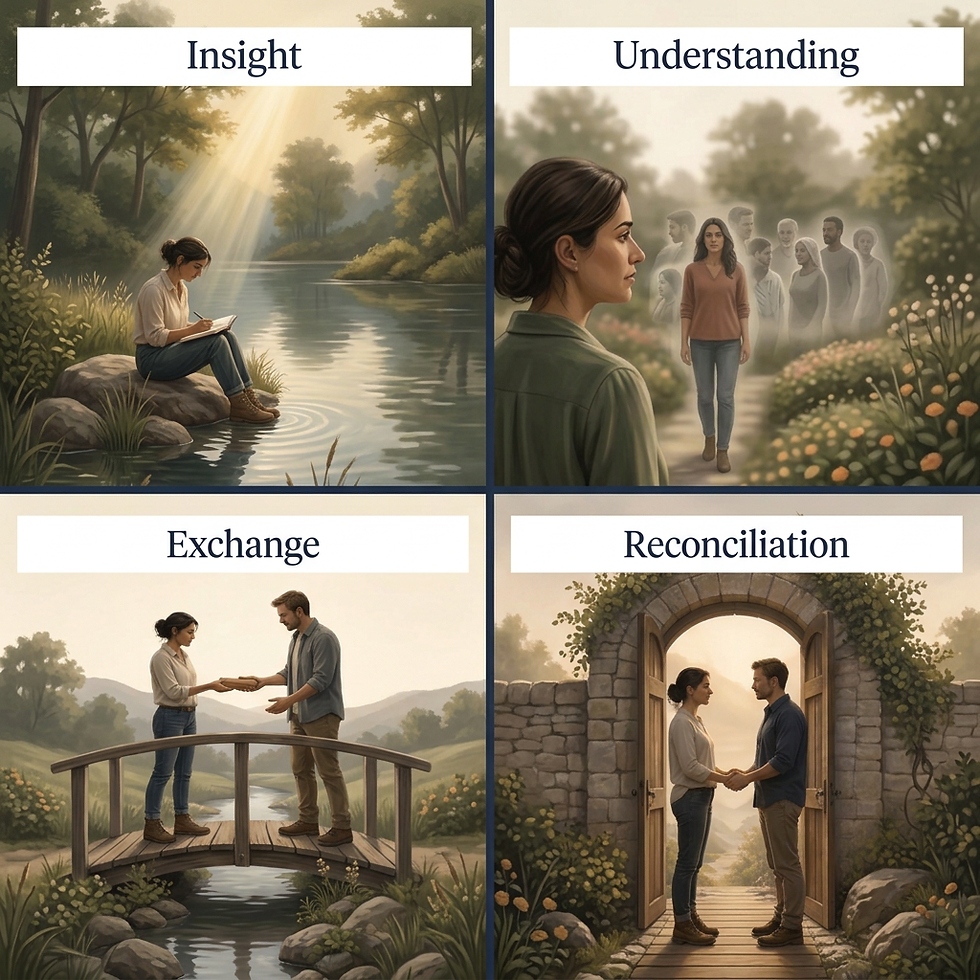
The Four Spaces of Forgiveness: A Step-by-Step Framework
Let’s break down Andrew’s model, which guides us through the nuanced journey from pain to potential restoration.
1. The Space of Insight: Facing Your Pain
What It Is: This is the starting point—honestly assessing the impact of the hurt and committing to “do no further harm.” It’s about cleaning your heart before God, not seeking revenge or harboring bitterness.
Action Steps:
Name the Hurt: Write down or pray about what happened and how it affected you.
Sit with the Pain: Allow yourself to feel the sadness, anger, or disappointment without rushing to fix it.
Commit to Non-Retaliation: Decide, with God’s help, not to seek revenge or spread bitterness.
Expert Insight: This space is about your own healing. Even if the other person never acknowledges the hurt, you can begin to release its grip on your life.
2. The Space of Understanding: Humanizing the Offender
What It Is: Here, you begin to “de-monsterify” the person who hurt you. This doesn’t mean excusing their actions, but recognizing their humanity and brokenness—just as God does with us.
Action Steps:
Reflect on Their Story: Consider what might have led them to act as they did (without justifying the harm).
Pray for Empathy: Ask God to help you see them through His eyes.
Release the Need to Judge: Let go of the desire to label them as irredeemable.
Expert Insight: This is often a slow, non-linear process, especially after deep betrayal. You may need to revisit this space multiple times as new layers of pain or understanding emerge.
3. The Space of Exchange: Rebuilding Trust
What It Is: If both parties are willing, this is where trust begins to be rebuilt through consistent, reliable actions. Think of it as a series of small, safe exchanges—like divorced parents coordinating child drop-offs.
Action Steps:
Start Small: Look for opportunities to show up, follow through, and keep promises.
Communicate Clearly: Set boundaries and expectations for future interactions.
Monitor Safety: Only proceed if both parties are committed to change and emotional safety.
Expert Insight: Many couples get stuck here. The offender may think, “I stopped the bad behavior, so we’re good,” but true trust requires ongoing, visible change and reliability.
4. The Space of Reconciliation: Restoring the Relationship
What It Is: This is the deepest, most challenging space. Reconciliation requires both people to engage in honest self-examination, repentance, and sustained change. It’s not just about apologies—it’s about transformation.
Action Steps:
Pursue Mutual Change: Both parties must be willing to grow, communicate, and address underlying issues.
Seek Support: Consider mediation, counseling, or pastoral guidance to navigate this complex process.
Practice Patience: Reconciliation is a journey, not a destination. Celebrate small steps forward.
Expert Insight: Reconciliation is a sacrifice and an act of love. It’s possible even in the most broken situations, but only when both people are committed to safety, honesty, and grace.
Practical Recommendations for Navigating Forgiveness
Whether you’re the one who’s been hurt or the one who’s caused pain, here are some actionable tips to guide your journey:
For Those Who’ve Been Hurt:
Take Your Time: Don’t rush the process. Healing is not linear.
Prioritize Your Relationship with God: Let Him carry your pain and guide your steps.
Set Boundaries: Forgiveness doesn’t mean tolerating ongoing harm.
For Those Who’ve Hurt Others:
Become Safe and Reliable: Show through actions, not just words, that you’re committed to change.
Listen and Validate: Acknowledge the pain you’ve caused without defensiveness.
Be Patient: Trust and reconciliation take time and consistent effort.
For Both Parties:
Seek Community: Don’t walk this road alone. Reach out to trusted friends, mentors, or professionals.
Embrace the Process: You may need to revisit earlier spaces as new challenges arise.
Keep Jesus at the Center: True freedom and healing come from Him.
Resources for Further Learning
Andrew and his team at Genesis Christian Mediation are launching a resource page this fall, including:
A downloadable PDF of the Four Spaces of Forgiveness model
Blogs and podcasts on relationships, conflict, and healing
Opportunities for connection and support
Final Thoughts: Forgiveness as a Lifestyle
Forgiveness isn’t a one-time event—it’s a lifestyle, a sacred rhythm that frees us from the heavy backpack of pain and bitterness. Whether or not reconciliation is possible, you can experience relief, hope, and a new beginning.
If you’re navigating the hard road of forgiveness, know that you’re not alone. Take the next step, trust the process, and let God do the deep work of healing in your heart and relationships.


